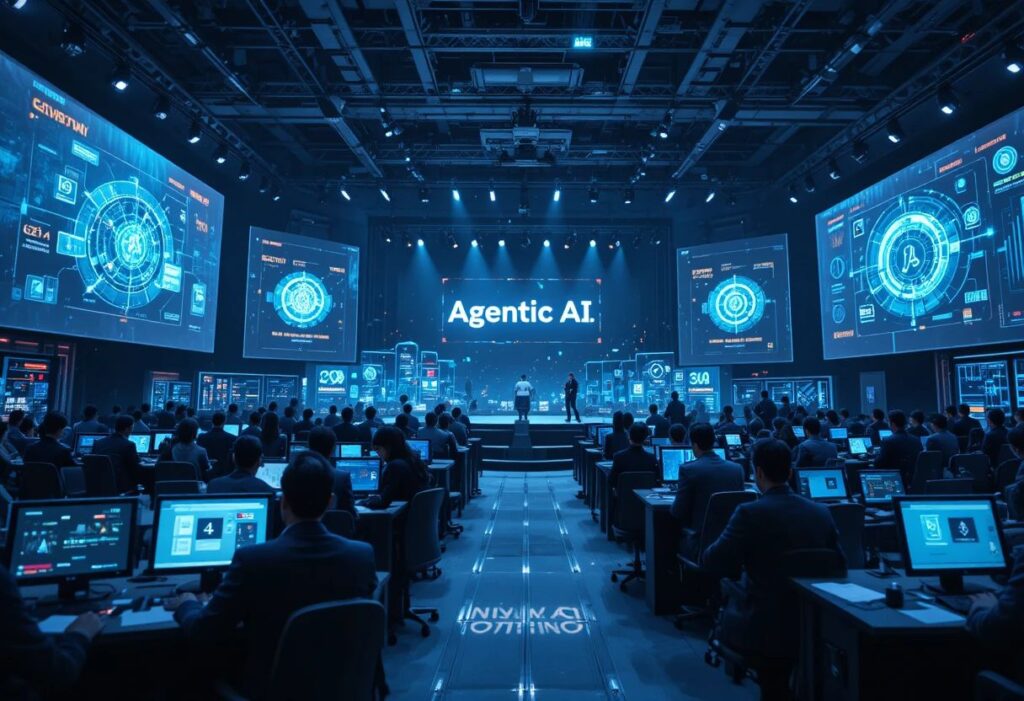
Why Agentic AI Takes Centre Stage at Infosecurity Europe 2026
Introduction
Agentic AI is no longer a future concept. It is happening now. At Infosecurity Europe 2026, it became the main focus for experts and businesses.
This new form of AI can make decisions, take actions, and adapt without constant human input. That power is changing how cybersecurity works. But it also raises serious questions about safety and control.
Why is everyone talking about Agentic AI? What makes it different from traditional AI? And how will it impact security in the coming years?
In this article, you’ll discover key insights, risks, and real-world uses of Agentic AI. Let’s explore why it took centre stage at one of the biggest cybersecurity events.
Agentic AI Takes Centre Stage at Infosecurity Europe 2026 – Key Announcements
Infosecurity Europe 2026 brought several important announcements that show how fast Agentic AI is evolving. Companies did not just talk about ideas. They introduced real tools and working systems.
One major highlight was the launch of autonomous security agents. These AI systems can detect threats, respond instantly, and even fix vulnerabilities without human help. This marks a big shift from traditional security tools that only alert users.
Another key announcement focused on AI-driven threat intelligence platforms. These platforms use Agentic AI to analyze large amounts of data in real time. As a result, organizations can predict attacks before they happen instead of reacting later.
There was also strong attention on secure AI development. New frameworks and guidelines were introduced to ensure that Agentic AI systems remain safe, transparent, and controllable. This is especially important as AI becomes more independent.
Collaboration was another major theme. Tech companies, cybersecurity firms, and organizations like OWASP emphasized working together to set global standards for AI security.
Overall, these announcements clearly show one thing. Agentic AI is moving from theory to real-world application. And it is set to redefine how cybersecurity works in the near future.
How Agentic AI Takes Centre Stage at Infosecurity Europe 2026 in Cybersecurity
Agentic AI is changing how cybersecurity works at its core. Instead of waiting for human instructions, these systems act on their own. They can detect, decide, and respond in real time.
At Infosecurity Europe 2026, experts showed how Agentic AI can reduce response time from hours to seconds. When a threat appears, the AI does not just send an alert. It investigates the issue, blocks the attack, and fixes weak points automatically.
Another key advantage is continuous monitoring. Agentic AI works 24/7 without fatigue. It scans networks, user behavior, and system activity to find unusual patterns. This helps stop attacks before they cause damage.
Agentic AI also improves threat prediction. By analyzing past data and current signals, it can identify risks early. This proactive approach is far more effective than traditional reactive security methods.
However, this power also brings challenges. If not properly controlled, Agentic AI systems can make wrong decisions or be targeted by attackers. That is why security experts stressed the need for strong governance and human oversight.
In simple terms, Agentic AI is not just a tool anymore. It is becoming an active defender in cybersecurity. That is exactly why it took centre stage at Infosecurity Europe 2026.
Agentic AI Takes Centre Stage at Infosecurity Europe 2026 with OWASP Insights
A major highlight of the event was the strong focus on secure AI practices. The OWASP GenAI Security Summit played a key role in this discussion. Experts gathered to address the risks that come with powerful, autonomous AI systems.
One of the main topics was how Agentic AI can introduce new attack surfaces. Since these systems can make decisions on their own, attackers may try to manipulate their behavior. This includes prompt injection, data poisoning, and unauthorized access to sensitive workflows.
OWASP experts also emphasized the need for secure design from the start. Instead of fixing problems later, developers must build Agentic AI systems with safety in mind. This includes proper access controls, data validation, and continuous monitoring.
Another important insight was transparency. Organizations were encouraged to ensure that AI decisions can be tracked and explained. This helps build trust and makes it easier to identify when something goes wrong.
The summit also highlighted the importance of shared standards. By working together, companies can create common security frameworks for Agentic AI. This reduces risks and ensures safer adoption across industries.
Overall, OWASP’s insights made one thing clear. As Agentic AI grows more powerful, security must grow with it. That is why it became a central topic at Infosecurity Europe 2026.
Security Risks as Agentic AI Takes Centre Stage at Infosecurity Europe 2026
As Agentic AI grows more powerful, it also introduces new security risks. At Infosecurity Europe 2026, experts made it clear that these systems are not risk-free. In fact, they can create challenges that traditional security tools are not ready for.
One major concern is loss of control. Agentic AI can make decisions on its own. If the system is not properly designed, it may take actions that were never intended. This can lead to serious security issues.
Another key risk is manipulation by attackers. Techniques like prompt injection and data poisoning can trick the AI into making wrong decisions. Since Agentic AI acts independently, even a small manipulation can cause large damage.
Data privacy is also a big issue. These systems often process large amounts of sensitive information. If not secured properly, this data can be exposed or misused.
There is also the risk of over-reliance. Organizations may trust Agentic AI too much and reduce human oversight. This can be dangerous, especially when the AI makes mistakes or faces new types of attacks.
Finally, attackers can target the AI itself. Instead of attacking systems directly, they may focus on breaking or controlling the AI agent. This creates a completely new battlefield in cybersecurity.
In simple terms, while Agentic AI brings speed and efficiency, it also demands stronger security measures. That is why understanding these risks is critical as Agentic AI takes centre stage at Infosecurity Europe 2026.
Industry Leaders Discuss Agentic AI Takes Centre Stage at Infosecurity Europe 2026
Industry leaders at Infosecurity Europe 2026 shared clear and practical views on Agentic AI. Their message was simple. This technology is powerful, but it must be handled with care.
Executives from top cybersecurity firms explained how Agentic AI is already improving threat detection and response. They highlighted faster decision-making and reduced workload for security teams. Many agreed that AI agents will soon become a standard part of every security system.
At the same time, leaders warned about blind trust. They stressed that human oversight is still necessary. Agentic AI can make mistakes, especially in complex or new attack scenarios. Keeping humans in the loop helps reduce risks.
Experts also discussed the importance of clear policies. Organizations need rules on how AI systems operate, what data they access, and how decisions are made. Without proper governance, Agentic AI can become difficult to control.
Another key point was collaboration. Leaders encouraged companies to share knowledge and work together. Building secure Agentic AI systems requires combined efforts from developers, security teams, and regulators.
Overall, industry voices at the event showed both excitement and caution. They see Agentic AI as a game-changer, but only if it is used responsibly. This balanced view is why Agentic AI truly took centre stage at Infosecurity Europe 2026.
Real-World Applications as Agentic AI Takes Centre Stage at Infosecurity Europe 2026
Agentic AI is not just theory anymore. At Infosecurity Europe 2026, many real-world use cases were shared. These examples show how AI agents are already solving real problems.
In cybersecurity operations, Agentic AI is being used to automate threat response. It can detect unusual activity, isolate affected systems, and fix issues without waiting for human action. This helps companies reduce damage and save time.
In the finance sector, Agentic AI helps prevent fraud. It monitors transactions in real time and blocks suspicious behavior instantly. This level of speed is difficult for human teams to match.
Healthcare is also benefiting from this technology. Agentic AI can manage sensitive data, detect system risks, and ensure secure access to patient records. This improves both safety and efficiency.
In IT and cloud environments, Agentic AI handles system monitoring and maintenance. It can identify performance issues, optimize resources, and even prevent outages before they happen.
Another growing use case is in enterprise automation. Businesses are using Agentic AI to manage workflows, handle repetitive tasks, and improve decision-making processes.
These real-world applications prove one thing. Agentic AI is already making a strong impact across industries. That is why it took centre stage at Infosecurity Europe 2026.
Future Trends After Agentic AI Takes Centre Stage at Infosecurity Europe 2026
The discussions at Infosecurity Europe 2026 made one thing clear. Agentic AI is only getting started. The coming years will bring faster growth, deeper integration, and stronger impact across industries.
One major trend is wider adoption. More organizations will start using Agentic AI in their daily operations. It will move from large enterprises to small and mid-sized businesses as tools become more accessible.
Another key trend is improved regulation. Governments and industry bodies are expected to introduce clear rules for AI systems. This will help ensure safety, transparency, and accountability as Agentic AI becomes more independent.
Security will also evolve. New defense strategies will be built specifically for AI-driven systems. This includes protecting AI agents from manipulation and ensuring they operate within safe boundaries.
Human-AI collaboration will become more important. Instead of replacing humans, Agentic AI will work alongside them. Humans will focus on strategy and oversight, while AI handles speed and automation.
There will also be rapid innovation. Companies will continue to develop smarter, more reliable AI agents. These systems will become better at understanding context, making decisions, and adapting to new situations.
In simple terms, the future of cybersecurity and technology will be closely tied to Agentic AI. Its role will only grow stronger after taking centre stage at Infosecurity Europe 2026.
Conclusion: Why Agentic AI Takes Centre Stage at Infosecurity Europe 2026 Matters
Agentic AI is no longer just an emerging trend. It is becoming a core part of modern cybersecurity. Infosecurity Europe 2026 clearly showed how fast this shift is happening.
From autonomous threat response to real-world applications, Agentic AI is changing how organizations protect their systems. It brings speed, efficiency, and smarter decision-making. But at the same time, it introduces new risks that cannot be ignored.
Experts, industry leaders, and organizations all agree on one point. The future of security will depend on how well we manage and secure these AI systems. Strong governance, clear policies, and human oversight are essential.
This is why Agentic AI took centre stage at the event. It represents both opportunity and responsibility. Those who understand and adopt it wisely will stay ahead in the evolving world of cybersecurity.
Future Trends After Agentic AI Takes Centre Stage at Infosecurity Europe 2026
The discussions at Infosecurity Europe 2026 made one thing clear: Agentic AI is still in its early stage, but its direction is already defined. The next few years will focus on scaling, securing, and refining how these systems operate in real environments.
One major shift will be deeper integration into enterprise security stacks. Agentic AI will not remain a separate tool. Instead, it will become embedded into existing cybersecurity platforms, working alongside SIEM, SOAR, and threat intelligence systems to create fully automated defense layers.
Another expected trend is stricter global regulation. As AI agents gain more independence, governments and cybersecurity bodies will push for clearer compliance frameworks. These rules will focus on accountability, data protection, and safe decision-making boundaries for autonomous systems.
We will also see rapid improvements in AI safety mechanisms. Future Agentic AI systems will likely include built-in guardrails that prevent harmful actions before they happen. This will reduce risks like misuse, manipulation, or uncontrolled behavior.
Human roles will also evolve. Security teams will move from manual monitoring to AI supervision. Their focus will shift toward strategy, oversight, and handling complex incidents that require human judgment.
Finally, continuous innovation will drive competition. Companies will race to build more reliable, explainable, and secure AI agents. This will push the entire cybersecurity industry forward at a much faster pace than before.
In the end, Agentic AI is not just shaping the future of cybersecurity—it is redefining it.
Conclusion
Agentic AI is rapidly changing the cybersecurity landscape, and Infosecurity Europe 2026 highlighted just how significant this shift is. From smarter threat detection to autonomous response systems, it offers powerful capabilities that can transform how organizations defend themselves. At the same time, it brings serious challenges that demand careful control, strong governance, and continuous oversight. The future will depend on how responsibly this technology is developed and deployed. One thing is certain: Agentic AI is no longer optional—it is becoming a core part of modern security strategy.

Pingback: 5 AI Agents That Work Like a Virtual Assistant for Freelancers