Chinese AI models
Chinese AI Models Are Crushing OpenAI on Price: What GLM-5.2 & LongCat-2.0 Mean for You
Here’s a number that should stop you for a second. A year ago, Chinese AI models handled less than 2% of all traffic on OpenRouter, one of the biggest marketplaces developers use to access AI models. Today that figure sits at roughly 45%. Not a slow creep either — this happened inside twelve months, while most people were still arguing about whether ChatGPT or Claude was “better.”
Xiaomi’s MiMo-V2-Pro alone now processes 4.21 trillion tokens a week on OpenRouter, good for a 21.1% share of the entire platform. OpenAI, by comparison, sits at 7.5%. Let that sink in for a second: a Chinese phone company’s AI model is now moving more traffic on one of the world’s largest AI marketplaces than OpenAI itself.
This isn’t a story about which country “wins” at AI, and it’s not really a story about geopolitics either, even though that keeps coming up in the headlines. It’s a much more practical story, and it’s one that affects anyone building a business, running a blog, or just trying to use AI tools without burning through their budget. AI just got dramatically cheaper, almost overnight, and most people haven’t noticed yet.
What Actually Happened
For most of 2023 through 2025, the AI conversation was dominated by a handful of Western labs: OpenAI, Anthropic, Google. Chinese labs existed, but they were treated as an afterthought, usually a few months behind on capability and mostly ignored outside China itself.
That changed fast in the first half of 2026. DeepSeek released its V4 series in April, the same week OpenAI shipped GPT-5.5, and undercut it on price by a genuinely absurd margin. Z.ai, a Beijing-based company that spun out of Tsinghua University and completed a Hong Kong Stock Exchange IPO in January 2026, released GLM-5.2 in mid-June. Meituan quietly released a model called “Owl Alpha” that topped OpenRouter’s developer usage charts for weeks before anyone realized it was actually a new Chinese model called LongCat-2.0 wearing a different name.
None of these companies were hiding, exactly. They just let the results speak first and the branding catch up later, which is a pretty unusual way to launch a product, and it worked.
Meet the Models Actually Moving the Market
A few names keep showing up in every conversation about this shift, and it’s worth understanding what each one actually does differently, because they’re not interchangeable.
GLM-5.2, from Z.ai, is the one getting the most attention from serious developers right now. It’s a mixture-of-experts model with roughly 744 billion total parameters, though only about 40 billion of those activate per token, which is part of how it stays fast and relatively cheap despite its size. It carries a 1 million token context window and, notably, ships under an MIT license, meaning the actual model weights are open and free for anyone to download, modify, and run themselves.
On real benchmarks, GLM-5.2 isn’t just “good for a cheap model.” According to VentureBeat’s coverage of the release, it beat GPT-5.5 outright on SWE-bench Pro, a demanding software engineering benchmark, scoring 62.1% against GPT-5.5’s 58.6%. It came close to matching Claude Opus 4.8 on long-horizon task completion. And it did all of this while charging roughly one-sixth of what the proprietary competitors charge for output tokens.
DeepSeek V4 is the other major player, and it took a different path entirely: pure aggressive pricing. The V4 Pro variant runs a massive 1.6 trillion parameter architecture but only 49 billion parameters active per token, and DeepSeek’s own API prices it at $0.435 per million input tokens and $0.87 per million output tokens. There’s a smaller sibling, V4 Flash, that’s even cheaper at $0.14 and $0.28 respectively, and it captures roughly 98% of the Pro version’s coding performance for a fraction of the cost, which is part of why it became the first open-weight model that development teams started dropping directly into production pipelines as a genuine substitute for a frontier proprietary model.
LongCat-2.0, from Meituan, is the quieter story but arguably the more interesting one. It spent weeks anonymously topping OpenRouter’s usage charts under the mysterious name “Owl Alpha” before Meituan revealed it was theirs. It also ships under an MIT license with no regional restrictions, meaning any team anywhere can download the weights and run it on their own infrastructure without asking anyone’s permission.
Here’s how the pricing actually stacks up against the models most people already know:
| Model | Provider | Input ($/1M tokens) | Output ($/1M tokens) | License |
|---|---|---|---|---|
| GPT-5.5 | OpenAI | $5.00 | $30.00 | Proprietary |
| Claude Opus 4.8 | Anthropic | $5.00 | $25.00 | Proprietary |
| GLM-5.2 | Z.ai | $1.40 | $4.40 | MIT (open) |
| DeepSeek V4 Pro | DeepSeek | $0.44 | $0.87 | MIT (open) |
| DeepSeek V4 Flash | DeepSeek | $0.14 | $0.28 | MIT (open) |
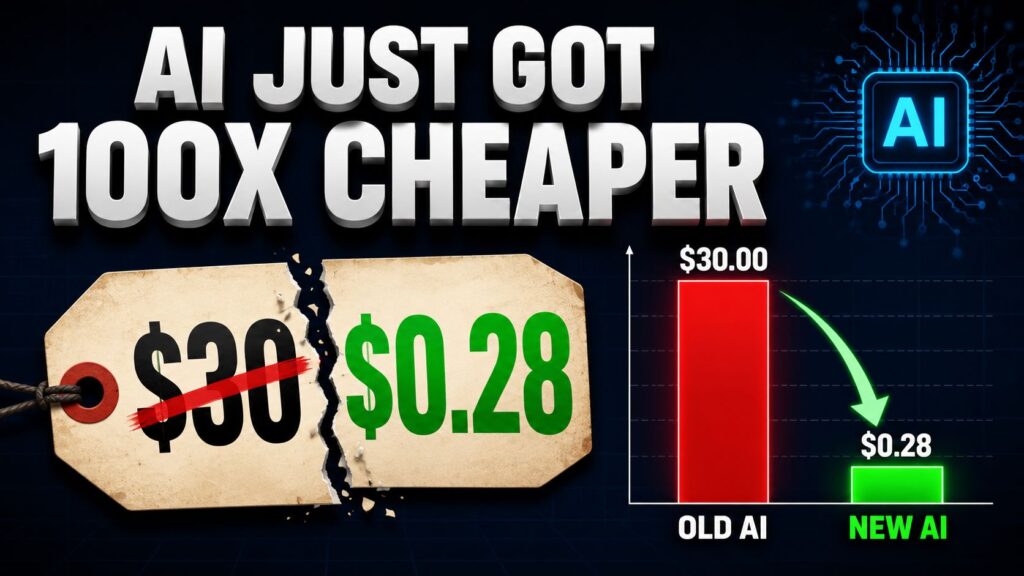
Look at that output column for a second. GPT-5.5 charges $30 per million output tokens. DeepSeek V4 Flash charges $0.28. That’s over a hundred times cheaper, for a model that still lands within a few points of frontier-class coding benchmarks on independent trackers.
Why the Prices Are This Different
It’s tempting to assume Chinese labs are simply undercutting everyone at a loss to buy market share, and there’s probably some truth to that in a few cases. But the fuller explanation is more structural than that, and it matters if you’re trying to understand whether this pricing gap is temporary or here to stay.
Part of it comes down to architecture. Both GLM-5.2 and DeepSeek V4 use a mixture-of-experts design, meaning the full model is enormous on paper, but only a small fraction of it actually activates for any given request. DeepSeek’s V4 series specifically introduced a hybrid attention mechanism that, according to technical breakdowns of the release, cuts inference computing cost to roughly 27% and memory cache usage to about 10% of its predecessor’s footprint at long context lengths. That’s not marketing spin, that’s a genuine engineering efficiency gain that translates directly into lower running costs, which then shows up as lower prices.
Part of it is also business model. Being open-weight means anyone can host these models, which creates competition among hosting providers that pushes prices down further. OpenRouter’s own breakdown of the open-weight landscape notes that GLM-5.2’s realized weighted-average pricing across all its hosts actually comes in below its own headline rate, purely because multiple providers are competing to serve the same open weights as cheaply as possible.
And part of it is simply margin. One widely circulated industry comment, cited in VentureBeat’s coverage, suggested that leading proprietary labs are likely operating at 90%-plus margins on their API pricing right now. If that’s even roughly accurate, it means there’s a lot of room for prices to come down across the board before anyone starts losing money, and the Chinese labs entering the market are essentially forcing that repricing to happen faster than it otherwise would have.
It’s Not Just Enterprise Developers Anymore
This is where it stops being an abstract industry story and starts actually mattering to regular people.
If you’re running a blog, a small business, or a side project that uses AI for writing, customer support, or content generation, the API you’re calling behind the scenes has a real cost, even if you’re using it through a tool that hides the pricing from you. As those underlying costs drop, tools built on top of them either get cheaper, or they stay the same price and pocket a bigger margin. Either way, understanding this shift gives you leverage as a buyer.
Developers building AI-powered products, chatbots, automation tools, anything that calls an LLM API repeatedly, are the ones seeing the most direct impact. A workflow that used to cost $30 per million output tokens on GPT-5.5 can, for many everyday tasks that don’t need frontier-level reasoning, run on DeepSeek V4 Flash for roughly a hundredth of that cost. For anyone running an AI automation agency or building tools that call these APIs constantly, that difference compounds fast across thousands of requests a month.
Even for non-technical users, this shift shows up indirectly. More AI features are becoming viable to offer for free, or at much lower subscription prices, precisely because the underlying compute cost keeps falling. The inference cost of running a GPT-3.5-level model dropped more than 280-fold between late 2022 and late 2024, and that downward curve, according to industry trackers, has only steepened heading into 2026.
The Honest Tradeoffs Nobody Skips Past Enough
None of this means you should blindly switch every workflow to the cheapest Chinese model available. There are real tradeoffs worth understanding before you make that call.
Data handling is the big one. DeepSeek’s first-party API, for example, does retain data for training purposes by default, which is a meaningfully different privacy posture than providers who explicitly don’t train on API data. If you’re handling sensitive client information, medical data, financial records, anything with real privacy stakes, this is not a detail to gloss over. Read the actual data policy of whichever provider you’re using, not just the pricing page.
Quality isn’t uniformly identical either, despite the impressive benchmark numbers. These models tend to specialize. GLM-5.2 leads on long-horizon software engineering and agentic tool use specifically, while DeepSeek V4 Pro dominates competitive programming and algorithmic tasks, scoring 93.5% on LiveCodeBench, the highest of any model tested, open or closed. Neither is simply “better” than the other across every category, and neither is automatically better than GPT-5.5 or Claude for every use case either. The right choice depends heavily on what you’re actually building.
Where you run these models matters too, and this is a detail casual users often miss entirely. Most serverless hosting providers quantize these open-weight models down to lower precision to cut their own hosting costs, which can measurably degrade output quality compared to the original released weights. A provider serving the full-precision version will usually cost a bit more than the rock-bottom listings you’ll see elsewhere, but the quality gap can be significant depending on the task.
And there’s a genuine geopolitical layer here too, one that’s not just background noise. The timing of GLM-5.2’s release, landing just days after a US export-control directive temporarily forced Anthropic to disable access to its most capable models for foreign nationals, wasn’t lost on anyone paying attention. For organizations that need reliable, uninterrupted access regardless of shifting export policies, an MIT-licensed model with no regional restrictions has an appeal that goes beyond just the price tag.
A Simple Decision Framework
Rather than treating this as an all-or-nothing switch, most people who actually use these models well end up routing different tasks to different models based on what each one is genuinely good at.
| Your Task | Best Fit | Why |
|---|---|---|
| Simple content drafts, bulk writing | DeepSeek V4 Flash | Extremely cheap, more than adequate quality for volume work |
| Complex coding, long-running agents | GLM-5.2 | Leads on long-horizon software engineering benchmarks |
| Competitive programming, algorithms | DeepSeek V4 Pro | Highest LiveCodeBench score of any model tested |
| Sensitive client or medical data | Claude or GPT-5.5 | Clearer, more established data-handling commitments |
| High-stakes reasoning, nuanced writing | Claude Opus 4.8 or GPT-5.5 | Still leads on several reasoning-heavy benchmarks |
| Budget-constrained side projects | GLM-5.2 or DeepSeek V4 Flash | Dramatically lower cost with strong real-world performance |
A useful pattern that shows up across engineering teams handling this well: route the easy, high-volume tasks to the cheapest capable model, and reserve the expensive proprietary models for the smaller share of requests that genuinely need frontier-level reasoning. Teams doing this consistently report saving 60% to 80% compared to routing everything through a single premium model, according to multiple 2026 cost-optimization guides circulating among developers.
What This Means If You’re Building Something in Pakistan or South Asia
This shift matters in a specific way for anyone building AI-powered tools, content, or services from a market where every dollar of operating cost matters more than it does for a well-funded startup elsewhere.
A freelancer or small agency in Karachi or Lahore running an AI-powered service, whether that’s an automation agency, a content tool, or a customer support bot for local clients, has historically had to either eat the cost of premium API pricing or compromise on quality with weaker, older models. That tradeoff has gotten a lot less brutal. Being able to run a genuinely capable model at DeepSeek V4 Flash pricing, roughly a hundredth of GPT-5.5’s output cost, changes the math on what’s viable to build and sell, even at price points that make sense for a local market with tighter budgets than the US or UK.
It’s worth being clear-eyed about the data question here too, the same way any international reader should be. If you’re building something for clients who care about where their data goes, that’s a real conversation to have upfront regardless of which country you or your client are in, not something specific to any one region.
How Fast the Market Share Actually Shifted
It’s worth sitting with the raw scale of this shift a little longer, because “45% of OpenRouter traffic” can sound abstract until you break down what that actually represents.
OpenRouter functions as a kind of central marketplace where developers route requests to whichever model fits their needs, often switching between providers with a single line of configuration change. It’s not a perfect mirror of the entire AI industry, but it’s one of the most honest real-time signals available, because developers vote with actual usage rather than survey answers about which model they think is best.
A year ago, that 2% Chinese-model share meant it barely registered as a category on any chart. Today’s roughly 45% means Chinese models are, in aggregate, handling nearly half of all requests flowing through one of the industry’s most-watched usage trackers. Xiaomi’s MiMo-V2-Pro pulling a 21.1% share on its own, ahead of OpenAI’s entire lineup at 7.5%, is the single data point that made a lot of industry watchers sit up. This wasn’t a niche open-source community running a hobby project. This was a consumer electronics company most people associate with phones and appliances, quietly becoming one of the largest AI infrastructure players in the world within a matter of months.
Part of what makes this shift durable rather than a temporary fluke is that it isn’t coming from one company. DeepSeek, Z.ai, Meituan, and Xiaomi are four separate organizations, with different funding structures, different specialties, and different reasons for competing this aggressively on price. When multiple competitors converge on the same strategy independently, that’s usually a sign of a real structural shift in the underlying economics, not a single company’s temporary pricing stunt.
How to Actually Try One of These Models
If any of this sounds interesting rather than just theoretical, trying these models out doesn’t require anything close to a technical background, and it’s worth doing before deciding whether any of this applies to you.
The simplest starting point for most people is a platform like OpenRouter, which lets you access dozens of models, including GLM-5.2, DeepSeek V4, and others, through one account and one API key, without needing to sign up separately with each individual lab. Many developer tools and no-code platforms, including automation builders like Make.com and n8n, already support routing requests through OpenRouter directly, meaning if you’re already building something with those tools, switching the underlying model is often a matter of changing one setting rather than rebuilding anything.
For anyone not building anything technical at all, some newer AI chat interfaces and browser extensions have started offering these open-weight models as selectable options alongside the usual big-name choices, often at noticeably lower or even free tiers, precisely because the underlying cost to the provider is so much lower than running GPT-5.5 or Claude Opus behind the scenes.
A practical way to test this yourself: pick one recurring task you already do with an AI tool, something like drafting product descriptions, summarizing documents, or answering repetitive customer questions, and run the exact same prompt through both your usual model and one of these cheaper alternatives. For most everyday tasks that don’t require frontier-level reasoning, the quality difference is a lot smaller than the price difference would suggest.
How We Got Here: A Six-Month Timeline
Understanding how fast this actually unfolded helps explain why so many people in the industry got caught off guard.
DeepSeek fired the first major shot in April 2026, releasing its V4 series the very same week OpenAI shipped GPT-5.5. That timing wasn’t a coincidence so much as a pattern DeepSeek had already established a year earlier with its previous releases: launch something genuinely competitive right as a major Western lab is trying to capture headlines with its own release, and let the price comparison do the talking. V4 Pro launched at a promotional price that later became permanent, undercutting proprietary alternatives by a wide margin from day one.
Z.ai followed in mid-June with GLM-5.2, arriving just days after a US export-control directive briefly forced Anthropic to disable access to its most capable models for foreign nationals. The timing gave GLM-5.2’s pitch an extra layer of appeal beyond price alone: an MIT-licensed model with no regional restrictions looked considerably more attractive to any organization worried about future access disruptions, regardless of which lab or country those disruptions might come from next.
Meituan’s approach was different and, in hindsight, almost sly. Rather than launching LongCat-2.0 with a big announcement, the company let it run anonymously on OpenRouter under the name “Owl Alpha,” where it spent weeks quietly climbing the usage charts purely on merit, with developers choosing it simply because it worked well and cost little, with no brand reputation attached at all. Only after it had already proven itself in the market did Meituan reveal the model was theirs. That’s a notably different go-to-market instinct than the usual pattern of leading with a splashy launch event.
Xiaomi’s MiMo-V2-Pro took a more conventional path but achieved the most startling result: becoming OpenRouter’s single most-used model by weekly token volume, ahead of anything OpenAI or Anthropic currently offers on that platform, largely on the combination of strong coding performance, a full 1-million-token context window, and pricing that undercuts Western frontier models by a wide margin.
Four different companies, four different strategies, all converging on the same basic conclusion within the same six-month window: compete hard on price and open access, and the market will follow. It did.
What This Means Specifically for Content Creators and Bloggers
If you’re running a blog, a YouTube channel, or any kind of content business that leans on AI tools for research, drafting, or production, this shift is worth understanding beyond the developer-focused angle, because it touches your actual costs even if you never write a line of code.
Many of the AI writing, editing, and research tools you already use are built on top of one of these underlying models, whether or not the tool’s marketing mentions it. As the wholesale cost of running these models keeps falling, tool builders have more room to either lower subscription prices, add more generous usage limits, or improve free tiers without losing money, since their own input costs just dropped substantially. Watching for tools that explicitly mention using open-weight or Chinese-model backends can sometimes mean better value, provided the output quality holds up for your specific use case.
For anyone building their own AI-powered tools as part of a content or affiliate business, the kind of automation agency or AI tools directory setup covered elsewhere on this site, this pricing shift changes the underlying math on what’s viable to build and sell. A chatbot or content-generation tool that would have cost a meaningful chunk of monthly revenue to run on GPT-5.5 pricing can often run the same workload on DeepSeek V4 Flash or GLM-5.2 for a small fraction of that cost, which either widens your margin or lets you price your own service more competitively for clients.
It’s also worth being realistic about where quality still matters more than price. If you’re producing content where nuance, tone, and getting subtle context right actually affects whether the piece performs well, and that’s genuinely true for a lot of long-form writing, the cheapest available model isn’t automatically the right tool for that specific job, even if it’s perfectly fine for bulk tasks like generating meta descriptions, summarizing research, or drafting first-pass outlines you’ll heavily edit anyway.
Is This a Bubble, or Is It Actually Sustainable?
A reasonable question worth asking directly: are Chinese labs pricing these models this aggressively because it’s genuinely sustainable, or because they’re burning money to buy market share and prices will eventually snap back upward?
The honest answer is that it’s probably some of both, and it likely varies by company. The architectural efficiency gains, the hybrid attention mechanisms and mixture-of-experts designs that genuinely cut compute costs, are real and don’t disappear even if a company’s broader strategy shifts later. Those gains are the part of this story most likely to stick around regardless of what happens to pricing at any individual company.
The open-weight licensing piece adds another layer of durability that a purely lab-controlled pricing strategy wouldn’t have. Once a model’s weights are released under an MIT license, that version exists permanently, hostable by any provider willing to run it, regardless of what the original lab decides to do with future pricing. Even if Z.ai or DeepSeek raised prices on their own first-party APIs tomorrow, competing hosts serving the same already-released weights would still offer cheap access, because the genie doesn’t go back in the bottle on open weights the way it can with a closed, proprietary model.
Where more caution is warranted is around any single company’s specific pricing, particularly promotional rates that could shift once market share targets are hit. Treating current prices as roughly indicative rather than permanently locked in is the sensible approach, the same way anyone building a business on any API pricing should build in some tolerance for future changes rather than assuming today’s numbers are guaranteed forever.
What to Watch Over the Next Few Months
A few signals worth keeping an eye on if you want to track whether this trend keeps accelerating or starts to level off. Watch whether Western labs respond with meaningful price cuts of their own, rather than just new feature announcements, since that would suggest the competitive pressure is genuinely reshaping the market rather than just creating a temporary two-tier system. Watch which specific hosting providers start offering full-precision, non-quantized versions of these open-weight models at scale, since that’s where the real quality-to-price value will end up concentrated. And watch whether more mainstream, non-technical AI tools start quietly switching their backend infrastructure to these cheaper models, since that’s the clearest sign this shift has moved from a developer-forum topic into something shaping the tools ordinary people use every day.
A Quick Checklist Before You Switch Anything Over
- Have you checked the specific data retention policy of the provider you’re considering, not just assumed based on country of origin?
- Does your actual use case need frontier-level reasoning, or is it high-volume, lower-stakes work that a cheaper model handles just fine?
- Have you tested the same prompt across both your current model and the cheaper alternative to compare real output quality?
- If you’re hosting through a third-party provider rather than the original lab, have you confirmed whether they’re serving the full-precision weights or a quantized, lower-quality version?
- Does your client or business have any specific compliance requirements that might restrict which model providers you’re allowed to use?
- Are you routing different tasks to different models based on their actual strengths, rather than switching everything over to whichever is cheapest?
If most of these check out, experimenting with one of these models for a genuinely low-stakes task is a reasonable, low-risk way to see the cost difference for yourself.
Frequently Asked Questions
Are Chinese AI models actually as good as GPT-5.5 or Claude? On several specific benchmarks, yes, sometimes better. GLM-5.2 beat GPT-5.5 on SWE-bench Pro, and DeepSeek V4 Pro posted the highest LiveCodeBench score of any model tested, open or closed. They’re not uniformly superior across every task, but for a large share of real-world use cases, the gap has closed considerably.
Is it safe to send business or client data to these models? It depends entirely on the provider’s specific data policy, not just its country of origin. Some Chinese model providers retain data for training by default, while others don’t. Read the actual policy for whichever host you’re using before sending anything sensitive, the same way you should with any AI provider.
Can I actually use these models without any technical setup? Yes, through platforms like OpenRouter, which offer these models via a simple API without needing to self-host anything. For non-developers, some tools built on top of these models are starting to appear with the cost savings passed through, though the ecosystem is still maturing quickly.
Why would a company release something this good for free, as open weights? A few reasons converge here. It builds developer trust and adoption quickly, since anyone can verify the model actually performs as claimed. It also creates competition among hosting providers, which drives usage up even if the original lab isn’t capturing all the revenue directly. And for some companies, it’s a strategic move to establish influence in the AI ecosystem independent of who’s paying for API calls.
Should I switch everything to Chinese AI models right now? Probably not entirely, and probably not blindly. The smarter approach most experienced teams are taking is routing different tasks to whichever model handles them best and most affordably, keeping premium proprietary models for sensitive data or genuinely high-stakes reasoning, and shifting high-volume, lower-stakes work to the cheaper open-weight options.
Will proprietary Western models drop their prices in response? Some pressure in that direction seems likely given how public the pricing gap has become, though frontier labs have historically been slower to cut prices than to add new capabilities. Whether GPT-5.5 or Claude pricing moves meaningfully in response to this competition is worth watching over the coming months rather than assuming either way.
Where This Leaves You
The headline here isn’t really “China versus America” in AI, even though that’s the framing most coverage defaults to. It’s that AI got dramatically, structurally cheaper in the span of about six months, and the pressure driving that came from genuine engineering competition rather than any single company’s charity.
If you’re building anything that calls an AI model repeatedly, whether that’s a content pipeline, an automation agency, or a side project you’ve been putting off because the API costs looked scary, it’s worth actually running the numbers again. The tools that felt too expensive to build six months ago might be entirely affordable now, and the gap between what frontier AI costs and what it actually needs to cost has never been more visible than it is right now.
MORE FROM US
HOW TO START AN AI AUTOMATION AGENCY

Pingback: How to Use Claude AI for Lead Generation